
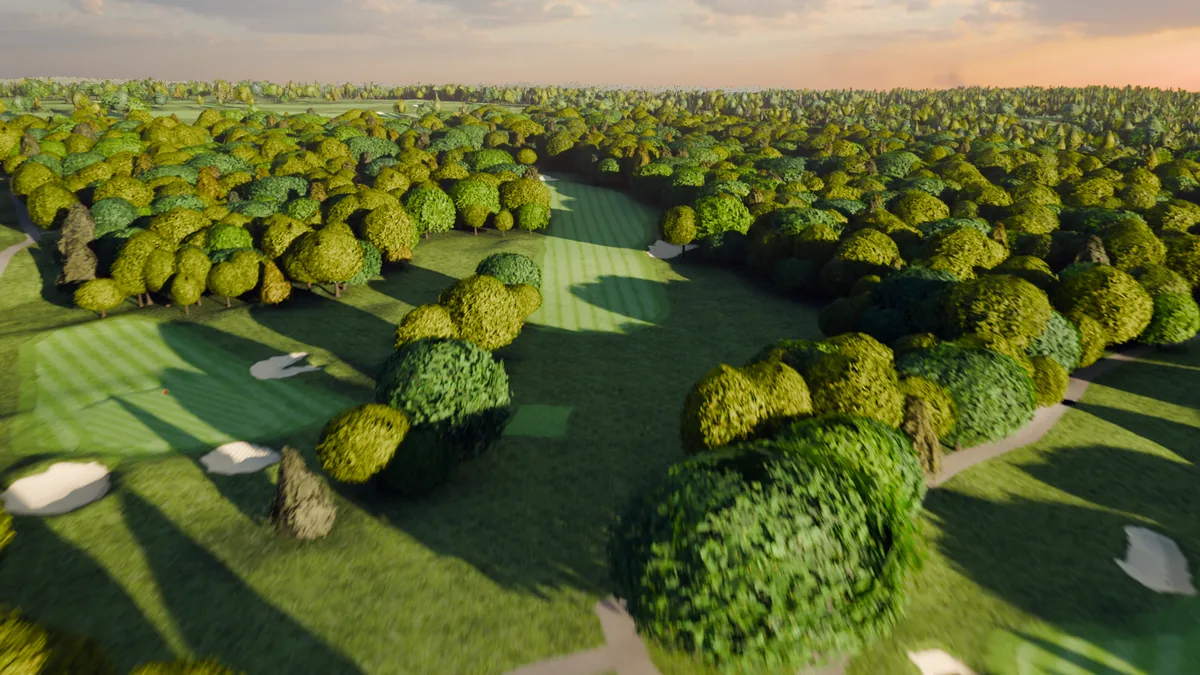
If you have looked into getting your course shot from the air, you have been quoted for a day: a pilot, a day, and a date that depends on the weather. This guide is about what that day actually costs a club beyond the invoice, and what is different when the result does not require one.
It is not a comparison of vendors and it makes no claim about what any other company does. It is about the constraints of a scheduled shoot, which are the same for everyone who does one.
What a day on the property costs you
Four things, and only the first is usually in the quote.
A weather window. Aerial work needs the right light and the wrong weather cancels it. Spring and early autumn are when the course looks best and also when the schedule is tightest. A cancelled day is rescheduled around both calendars.
Holes out of play. A crew working the seventh means golfers are not playing the seventh, or are playing it around the work. On a busy Saturday that is revenue, and on a member day it is a conversation at the bar afterwards.
Somebody's attention. A superintendent or a pro is walking with the crew for most of a day. That is the most expensive person at the club spending a day not doing their job.
One light, across many hours. This is the one nobody mentions and it is visible in the result. A shoot that starts at nine and finishes at four produces a first hole in flat morning light and a sixteenth in deep afternoon shadow. The course looks like two courses.
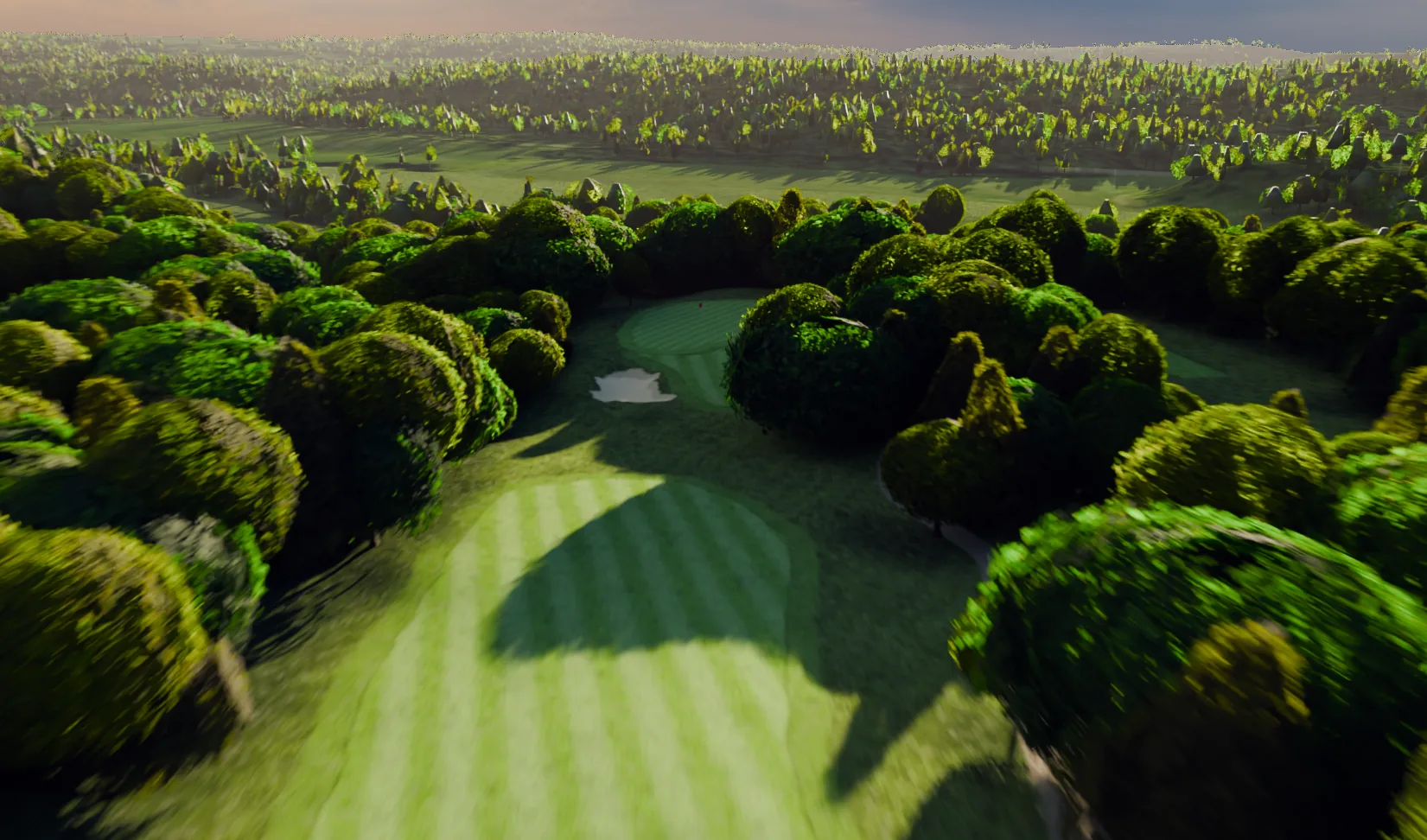
What is different when nobody has to fly
Each of those four disappears, and the fourth inverts into something you cannot buy with a shoot:
- No day to schedule. Nothing goes on a calendar and nothing gets cancelled.
- No hole out of play. Nothing happens on the property, so nothing stops.
- Nobody's attention. You send a scorecard. The next thing you do is review
eighteen holes.
- The same light on every hole. Every hole is shown at the same hour of the
same evening, which is the light a course looks best in and which no single day of shooting can give you across eighteen holes.
That last point is worth sitting with, because it is the one that shows. A golfer scrolling eighteen holes sees a consistent course rather than a morning course and an afternoon course.
The honest limits
Three, stated plainly, because a page that lists only advantages is a page nobody believes.
- No buildings. The clubhouse, the halfway house and the cart barn are not
in it. If your marketing needs the clubhouse, that is a picture of a building, and this does not replace it.
- Numbers come from your scorecard. Par and yardages are transcribed from
the card you send. Nothing is calculated, and a hole with no card data carries no distance rather than a guess.
- It is not a measuring instrument. It shows how a hole plays and reads,
and it should never be used to settle a distance.
Which one is right for your club
Genuinely both exist for reasons, and the question is what you need the result to do.
A scheduled shoot is the answer when you need people in it: a member event, a tournament, a wedding on the lawn, the clubhouse at golden hour. Those are things that happen on a day, and capturing them requires being there on that day.
A tour is the answer when you need the golf course, hole by hole, on your website, correct, in one light, and kept correct as the course changes. That is a different deliverable, and it is what a golfer deciding between two courses is looking for.
Plenty of clubs end up with both, for the straightforward reason that they are answering different questions. The sequencing that usually makes sense is the tour first, because it is the thing that sits on your website every day of the year, and a shoot when there is an event worth filming.
What to ask whoever you talk to
Five questions that separate the quotes, whichever route you go:
- What happens if a hole is renovated next year, and what does that cost?
- Who owns the finished tour, and what happens to it if we stop working together?
- Does the tour work on our existing website without a rebuild?
- Can one hole be linked on its own, for a tee marker code?
- Where do the yardages come from?
That last one is the one worth listening hardest to. A vendor who says the distances come off your scorecard is a vendor who has thought about being wrong in front of your members.
The course tour page has one running if you want to see what the result looks like before deciding anything.